Choosing the right truck bed setup is a practical decision for contractors and tradespeople. The way tools and materials are stored affects not only convenience, but also security, durability, and day-to-day workflow.
The debate around truck caps vs tonneau covers often comes down to how a vehicle is used in real working conditions. While both options provide some level of truck bed protection, they serve very different purposes once the workday begins.
Understanding the Core Differences
At a basic level, tonneau covers are designed to protect the truck bed from weather and provide a low-profile appearance. They sit flush with the bed and are typically made from soft or hard folding materials.
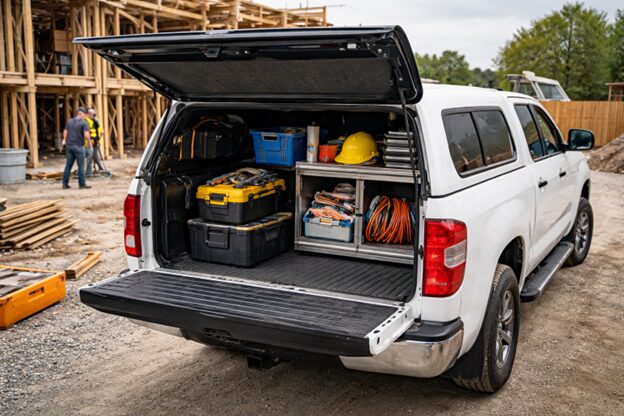
Truck caps, on the other hand, create a fully enclosed space. They extend upward from the bed rails and often include side windows, rear access doors, and optional interior shelving or lighting.
For occasional hauling or light-duty use, tonneau covers may be sufficient. However, for tradespeople carrying tools daily, the difference in structure becomes more important.
Weather Resistance and Cargo Protection
Ontario job sites often involve changing weather conditions. Rain, snow, and dust can quickly affect tools and materials stored in an open or partially covered bed.
Tonneau covers offer basic protection against rain and debris. However, gaps around the edges and the flexible nature of some covers can allow moisture to enter, especially during heavy weather or highway driving.
Truck caps provide a more complete seal. With proper installation, they offer better protection against water intrusion and airborne debris. This is particularly useful for trades that rely on sensitive equipment or materials that need to stay dry.
In terms of cargo protection, the enclosed design of a cap creates a more controlled environment, reducing exposure to the elements over time.
Daily Access and Work Truck Storage
Ease of access is another key factor in work truck storage. Tonneau covers allow quick access by folding or rolling back the cover, making them useful for loading and unloading larger items.
However, they do not provide vertical storage space. Tools are often stacked or placed loosely in the bed, which can lead to disorganization and shifting during transport.
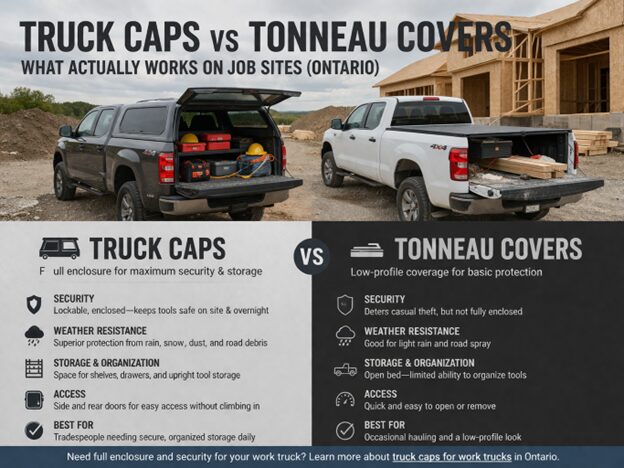
Truck caps allow for more structured storage. With the addition of shelving or drawer systems, tools can be organized in a way that supports daily tasks. This reduces time spent searching for equipment and helps maintain a consistent workflow.
Side access panels, available on many cap setups, also make it easier to reach tools without climbing into the truck bed.
Security Considerations on Active Job Sites
Security is a major concern for contractors, especially when vehicles are left on job sites or parked overnight.
Tonneau covers provide a visual barrier, but they are not always designed for high security. Soft covers can be cut, and even some hard covers may be easier to force open compared to fully enclosed systems.
Truck caps offer a higher level of tool security. Lockable rear doors and reinforced panels make it more difficult for unauthorized access. This added protection is important for tradespeople carrying valuable equipment.
For those working across multiple sites or storing tools in their vehicle overnight, a fully enclosed system is often the more reliable option.
In scenarios where tool security and full enclosure are priorities, many contractors turn to professionally installed truck caps for work trucks to create a more secure and organized setup that aligns with daily job demands.
Matching the Setup to Real Work Conditions
The right choice ultimately depends on how the truck is used each day. Tonneau covers work well for drivers who need occasional coverage and prefer a lightweight, flexible option.
Truck caps are better suited for consistent, tool-heavy work. They support organized storage, improve weather resistance, and offer stronger security on active job sites.
For many tradespeople, the decision is less about preference and more about function. A setup that reduces downtime, protects equipment, and supports efficient workflows will provide the most value over time.
By evaluating real working conditions rather than appearance alone, truck owners can choose a solution that fits the demands of their trade and the realities of the job site.


